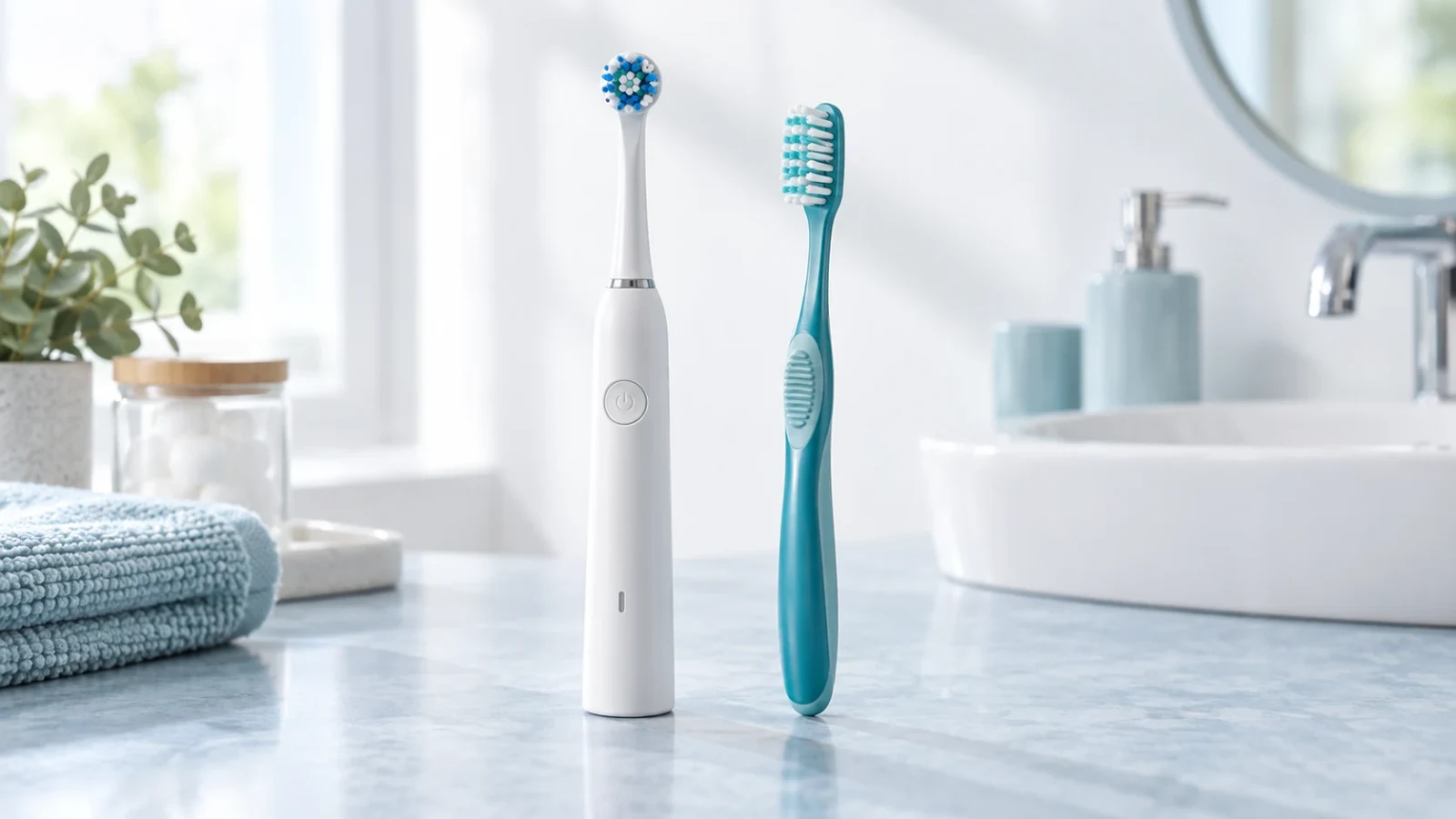

Most people brush their teeth twice a day - but technique matters as much as frequency. Brushing too hard, too fast, or missing the same spots every day leaves plaque behind exactly where problems start. Here’s how to actually clean your teeth well, step by step, along with the flossing that brushing can never replace.
Good technique is what makes the rest of your routine work. Pair it with the habits in our cavity-prevention guide for the best protection.
How to Brush Properly
- Use a soft-bristled brush and a pea-sized amount of fluoride toothpaste
- Angle the bristles at about 45 degrees to the gumline
- Use small, gentle circular movements - not hard back-and-forth scrubbing
- Cover every surface - outer, inner, and biting surfaces of each tooth
- Don’t forget the gumline and the backs of the last molars
- Brush for a full two minutes, twice a day
- Gently brush your tongue to freshen breath
How to Floss Properly
- Use about 40–45 cm of floss, winding most around your middle fingers
- Guide it gently between teeth - never snap it into the gum
- Curve it into a C-shape against each tooth and slide it under the gumline
- Move to a clean section of floss for each gap
- Floss once a day - the time of day matters less than doing it
Key fact: Brushing cleans only about three of the five surfaces of each tooth - the sides that touch neighbouring teeth are missed entirely. That’s where many cavities and much gum disease begin, and it’s exactly why daily flossing (or interdental brushes) is not optional.
Common Mistakes to Avoid
- Brushing too hard - it wears enamel and causes gum recession
- Brushing straight after acidic food or drink - wait about 30 minutes
- Rinsing with water right after brushing - spit, don’t rinse
- Using a worn brush - replace it every three months, or sooner if frayed
- Skipping flossing - no brush reaches between the teeth
- Rushing - most people brush for far less than two minutes
Tools That Can Help at a Glance
| Tool | What It Helps With |
|---|---|
| Soft manual brush | Everyday cleaning, gentle on gums |
| Electric brush | Consistent technique and timing |
| Dental floss | Cleaning between tight teeth |
| Interdental brushes | Larger gaps and around braces |
| Water flosser | Braces, bridges, and dexterity issues |
⚠ Important: If your gums bleed when you start flossing, it’s usually a sign of existing inflammation, not a reason to stop. Keep going gently and it typically settles within one to two weeks. If bleeding persists, have your gums checked.
Want a personalised cleaning check?
At a check-up and clean at The Dentart, Sarjapura, Bengaluru, we’ll show you exactly where you’re missing and how to improve your technique. Book your visit today.
Frequently Asked Questions
Brushing and flossing questions our patients in Sarjapura ask most.
Should I brush before or after breakfast?
Either works, but if you brush after, wait about 30 minutes following acidic food or juice so you don’t brush softened enamel.
Is flossing really necessary?
Yes - brushing can’t reach between teeth, where much decay and gum disease begin. Floss or interdental brushes are essential.
How hard should I brush?
Gently. Hard scrubbing doesn’t clean better - it wears enamel and pushes gums back. Let the bristles do the work.
How often should I change my toothbrush?
Every three months, or sooner if the bristles look splayed. A frayed brush cleans poorly.
Are electric toothbrushes worth it?
They can make good technique and timing easier, which helps many people. A manual brush used well is also effective.
Final Takeaway
Clean teeth come down to technique, not effort: a soft brush angled at the gumline, gentle circles for two minutes, spitting without rinsing, and daily flossing to reach what the brush can’t. Get those right and you prevent the majority of dental problems before they start.
Book a check-up and clean at The Dentart, Sarjapura, and we’ll help you perfect your routine.
You May Also Find Helpful
Book a Consultation
It’s easy and free!